
Petrol & Gas Engineering

About the Department

The Department of Petroleum and Gas Engineering, under the School of Infrastructures, Process Engineering and Technology, Federal University of Technology, Minna, Nigeria is committed to training engineers who can design processes and machines, manufacture, utilise and maintain oilfield equipment for exploitation of the earth’s petroleum resources in an environmentally safe and efficient manner. Through indigenous technologies and sustainable practices, we strive to integrate key science and engineering principles to address the technological challenges of the petroleum and natural gas industry.

Brief History of the Department

In 2018 an ad-hoc body comprising of members from other Engineering departments within Federal University of Technology, Minna prepared an Academic Brief for the Department of Petroleum and Gas Engineering. The Academic brief prepared for Department of Petroleum and Gas Engineering was approved by the University Senate on 27th March, 2019, The Department of Petroleum and Gas Engineering passed the NUC Resource verification exercises in December, 2020, and then after given the nod to start the Programme. The Department of Petroleum and Gas Engineering, Federal University of Technology, Minna began in 2021/2022 with 65 students. Presently the Department has a total of 320 students from 200 Level to 500 Level.

The pioneer Head of the Department was Engr.  (Prof.) Abdulkadir Mukhtar (2022-2023) and Engr. (Prof.) Eyitayo A. Afolabi is currently heading the Department (2023- till date).

Vision

To attain the ultimate height in the training of high level Information and Communication Technology (ICT) compliance Petroleum Engineers imbued with self-confidence, founded on very sound technical and scientific knowledge to meet the daunting challenges of providing solutions to complex Petroleum Engineering problems for the benefit of Nigerians and the World at large.

Mission

To be internationally recognized as a Centre for the training of high-level manpower in Petroleum and Gas Engineering.
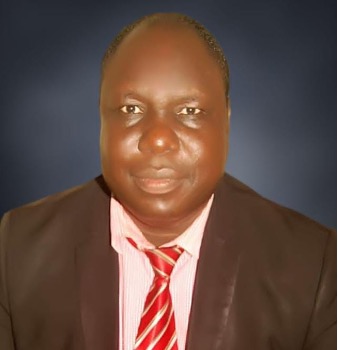
Engr. Prof. E.A AFOLABI

HOD, Petroleum and Gas Engineering

Programmes Offered

Undergraduate

Bachelor of Engineering (B.Eng), Petroleum and Gas Engineering

Accreditation status

The Department enjoys Provisional accreditation by National Universities Commission, NUC and is preparing for professional Accreditation by Council for the Regulation of Engineering in Nigeria, COREN).

Research Outputs

Include:

(i) Total publications (25)

(ii) Citation count:  More than 2500

(iii) Research areas: Advanced Engineering Materials, Additive Manufacturing, Mineral processing and Extractive Metallurgy, Physical Metallurgy and Mechanical Metallurgy, Corrosion and Electrochemistry.

(iv) International co-authorship percentage (h-index: 60, and i10-index: 80)

(v) Grants (6), Patents (4), Commercialisation (Processing ongoing)

(vi) Journal hosted/published by the school

(vii) Collaborations (International 6), (Local 8)


Laboratory/Facilities

 Equipment list

Drilling Laboratory

  • 4 Scale Mud balance
  • Electronic Top-loading Balance

Reservoir Engineering Laboratory

– Fluidization Apparatus

Community Services

  1. Prof. E. A. Afolabi appointed as Resource person for Outcome-Based Education (OBE) training for Program Evaluators, organized by COREN on May, 2024
  2. Prof. E. A. Afolabi appointed as Resource person for Outcome-Based Education (OBE) training for Universities Program Implementors, organized by COREN on May, 2024
  3. Prof. M. Abdulkadir (2023) was Resource Person on a verification visit to the proposed undergraduate academic programmes in Redeemers University, Ede, Osun State on the 16th to 18th of April 2023.                                                                                                   
  4. Prof. M. Abdulkadir (2023) was Board Member, African Energy Council on the 27th of March 2023.
  5. Prof. M. Abdulkadir (2023) was Moderator, Nigerian Content Development and Monitoring Board (NCDMB) and Federal Inland Revenue Service (FIRS) Nigeria Oil and Gas Suppliers’ Tax Awareness Workshop held at the NCDMB Conference Hall, Yenagoa, Bayelsa State on the 28th of March 2023.
  6. Prof. M. Abdulkadir (2023) was Board Member, African Energy Council on the 27th of March 2023.
  7. Dr. Mrs. Eterigho E.J. et al. (2023) took Career talk to College of Education Model School, Day Secondary School Barkin Saleh and Government Science college Gidan Kwano Tunga Minna, July 2023, Association of Professional Women of Nigeria (APWEN).
  8. Dr. Mrs.Eterigho E.J. et al. (2023), APWEN branch held Senior secondary inter-schools STEM quiz competition June 2023.
  9. Dr. Mrs. Eterigho E.J. et al. (2023), APWEN branch held Medical Outreach to Tunga market Minna to mark the International Women’s Day 8/03/2023.
  10. Dr. Mrs. Eterigho E.J. et al. (2023), APWEN branch held FUTMinna Collegiate Event, Learn Together, with theme, “She Did, I can”, at the PTDF Hall, Chemical Engineering Department, F.U.T. Minna. 18/01/2023.


Alumni & Industry Linkages

Members of Industrial Advisory Committee for our PGE Department are FROM Nigerian Liquefied Natural Gas, Bonny and NNPC Abuja.

Industry partners

Shelter Clay Limited, Minna.

Scientific Equipment Development Institute (SEDI), Minna.

Internship placement partners

-NNPC PPMC DEРОТ Suleja, Niger State.

-NPSC (Nigeria Pipeline and Storage Company) Kaduna State.

-NNPC PPMC DEРОТ Suleja, Niger State.


Student Resources

(i) Timetable

Lecture Timetable

Continuous Assessment Timetable

Examination Timetable


(ii) Project guidelines


Student(s) develop a technology and/or system to solve a known and significant materials and metallurgical engineering problem, design, and if possible/practicable, build/produce/ manufacture some relevant new materials/device(s) representing the solution using the skills acquired in the programme


(iii) Seminar schedule


Student Industrial Work Experience Scheme (SIWES) Seminar schedule

Undergraduate Project Proposal Seminar

Undergraduate Project Final Defence Seminar


(iv) Student’s statistics (Programmes and levels)

2025/2026

Student’s statistics

100 Level

221

200 Level

121

300 Level

77

400 Level

85

500 Level

63

Industrial Advisory Board: Our Industrial Partner are


Name

Address

1.

Engr. (Dr.) Wilson Dadet


Nigeria LNG ltd

Corporate Head Office

Eastern bypass, Port-Harcourt, River State

08035300236; Wilson.dadet@nlng.com

2.

Engr. Albert Gregory Yahaya

NNPC Gas and Power Investment Services (NGPIS)

NNPC Tower, Central Business District, Abuja.

08031590077; albert.yahaya@nnpc.com

3.

Engr. Olaniyi Ejidare


Nigeria LNG ltd

Corporate Head Office

Eastern bypass, Port-Harcourt, River State

0803775629; ejidare.olaniyi@nlng.com

4.

Engr. Mrs. Rose Ugochi Okonkwo


Executive director

NNPC Foundation, No 8 Wale Olanipekun Street

CBD, NNPC Tower, Abuja

07064185080;

5.

Engr. Edith Opuada-Hart


Lead HSSE

Community Projects, Trian 7

Nigeria LNG ltd Projects

08033366153; edith.hart@nlng.com

Programme Educational Objectives

The Programme Educational Objectives of the B. Tech Petroleum and Gas Engineering, Federal University of Technology Minna describe the expectations of our graduates in their career and professional accomplishments within 3 -5 years of graduation. The PEOs are listed below:

1. PEO1: Graduates competent in practicing fundamental scientific and engineering principles in Petroleum and Gas Engineering in a creative and innovative manner.
2. PEO2: Graduates capable of communicating and managing effectively in diverse areas of Petroleum and Gas engineering disciplines.
3. PEO3: Graduates practicing professional ethics, life-long learning, and sustainable development for the betterment of the profession and society.
4. PEO4: Graduates capable of identifying, analyzing and solving unpredictable problems encountered with downstream expansion, midstream infrastructure and upstream deep-water assets.
5. PEO5: Graduates proficient in applying advanced specialist knowledge to solve safety hazards related to gas flare commercialization, modular refinery development, oil and gas field services.

PROGRAMME OUTCOMES (POs)

Students of Petroleum and Gas Engineering, Federal University of Technology Minna, are expected to have these attributes (Knowledge, Skills and Attitudes) by the time of graduation:


PO1: Engineering knowledge Apply knowledge of mathematics, natural science, computing and engineering fundamentals, and an engineering specialization to develop solutions to complex engineering problems.

PO2: Problem Analysis –Identify, formulate, research literature and analyze complex engineering problems reaching substantiated conclusions using first principles of mathematics, natural sciences and engineering sciences with holistic considerations for sustainable development.

PO3: Design/Development of Solutions –  Design creative solutions for complex engineering problems and design systems, components or processes to meet identified needs with appropriate consideration for public health and safety, whole-life cost, net-zero carbon as well as resource, cultural, societal, and environmental considerations as required.

PO4: Investigation – Conduct investigations of complex engineering problems using research methods including research-based knowledge, design of experiments, analysis and interpretation of data and synthesis of information to provide valid conclusions.

PO5: Modern Tools Usage – Create, select and apply and recognize limitations of appropriate techniques, resources and modern engineering and IT tools, including prediction and modelling, to complex engineering problems

PO6: The Engineer and the World –  When solving complex engineering problems, analyze and evaluate sustainable developments impacts to: society, the economy, sustainability, health and safety, legal frameworks, and the environment.

PO7: Ethics Apply ethical principles and commit to professional ethics and norms of engineering practice and adhere to relevant national and international laws. Demonstrate an understanding of the need for diversity and inclusion.

PO8: Individual & Team Work Function effectively as an individual, and as a member or leader in diverse and inclusive teams and in multi-disciplinary, face-to-face, remote and distributed settings.

PO9: Communication –  Communicate effectively and inclusively on complex engineering activities with the engineering community and with society at large, such as being able to comprehend and write effective reports and design documentation, make effective presentations, taking into account cultural, language, and learning differences.

PO10: Project Management & Finance Apply knowledge and understanding of engineering management principles and economic decision-making and apply these to one’s own work, as a member and leader in a team, and to manage projects in multi-disciplinary environments.

PO11: Lifelong Learning – Recognize the need for, and have the preparation and ability for (i) Independent and life –long learning (ii) Adaptability to new and emerging technologies and (iii) Critical thinking in the broadest context of technological change.