The Mechanical Engineering (MEE) Department at the Federal University of Technology, Minna, is a premier centre of engineering excellence, advancing resilient and sustainable mechanical solutions for national and global challenges. Grounded in the principles of motion, energy, force, mathematics, and materials science, the department applies rigorous engineering problem‑solving to the design, analysis, manufacture, operation, and maintenance of mechanical systems while ensuring safety, reliability, efficiency, and competitive costing.
Our curriculum aligned with contemporary global standards and accredited by the National Universities Commission (NUC) and the Council for the Regulation of Engineering in Nigeria (COREN) combines fundamental theory with practical experience using modern tools such as CAD, CAM, simulation, and product life‑cycle management systems.
MEE Department’s research and teaching priorities encompass advanced manufacturing, energy systems, fluid and thermal sciences, solid mechanics, and industrial systems engineering, producing multi‑physics solutions and constitutive models for real‑world problems. Students participate in laboratory work, project‑based learning, and industry internships, preparing them to become industry‑ready engineers, innovators, and ethical leaders.
Committed to national self‑reliance and international engagement, the Department cultivates multidisciplinary professionals who advance technological innovation, enhance competitiveness, and promote sustainable socio‑economic development locally and globally.
The Department was established in 1985 under the School of Engineering and Engineering Technology (SEET), with two academic staff members and two students. Its establishment was based on the recommendation of a team of academics and professionals under the Chairmanship of Prof. B. G. Bajoga, the then Vice-Chancellor of Abubakar Tafawa Balewa University, Bauchi. Other members of the committee were: Dr. P. R. Lancaster, Department of Mechanical Engineering, University of Bradford, England; Engr. Olu Awoyinfa, COREN Representative; Engr. Prof. S. Y. Aku, Department of Mechanical Engineering, Ahmadu Bello University (ABU), Zaria; and Prof. A. T. Suleiman, former Vice-Chancellor, Federal University of Technology, Yola.
Currently, the Department has 24 academic staff members — comprising 11 Professors, 3 Associate Professors, 5 Senior Lecturers, 2 Lecturers I, 2 Lecturers II, and 1 Assistant Lecturer in addition to 9 Technical Staff and 2 Administrative Staff.
The Department offers a range of degree programmes, including Bachelor of Engineering (B.Eng.), Master of Engineering (M.Eng.), Postgraduate Diploma (PGD), and Doctor of Philosophy (Ph.D.), with various specialisation options. The Department has consistently adhered to the approved minimum academic standards for courses in Mechanical Engineering. In line with the new policy direction of the National Universities Commission (NUC), the Department has incorporated Entrepreneurship into its curriculum and commenced the implementation of the Core Curriculum and Minimum Academic Standards (CCMAS) framework from the 2023/2024 academic session.
The vision and mission statements of the Department are fully aligned with those of the School of Infrastructure, Process Engineering and Technology (SIPET) and of the Federal University of Technology, Minna as a whole. Following the restructuring of the School of Engineering and Engineering Technology (SEET) into two schools, the Department is now domiciled under the School of Infrastructure, Process Engineering and Technology (SIPET). Past and present Heads of Department are listed in Table 1.
Table 1. Past and present Heads of Departments
|
SNo |
NAME |
PERIOD |
|
|
1 |
Dr. V. Malichy |
January 1985 |
December 1988 |
|
2 |
Prof. F.O. Akinbode |
January 1989 |
June 1998 |
|
3 |
Prof. R. H. Khan |
June 1998 |
September 2001 |
|
4 |
Dr. S. O. Ubokwe |
October 2001 |
March 2004 |
|
5 |
Dr. O. K. Abubakre |
March 2004 |
January 2007 |
|
6 |
Dr. E. Mudiare |
January 2007 |
February 2008 |
|
7 |
Dr. O. K. Abubakre |
February 2008 |
August 2008 |
|
8 |
Prof. R. H. Khan |
September 2008 |
October 2011 |
|
9 |
Dr. J.O. Abu |
October 2011 |
September 2013 |
|
10 |
Dr. O. A. Olugboji |
October 2013 |
January 2018 |
|
11 |
Dr. A. Nasir |
January 2018 |
January 2019 |
|
12 |
Prof. S. A. Lawal |
January 2019 |
January 2023 |
|
13 |
Prof. K. C. Bala |
January 2023 |
March, 2026 |
|
14 |
Dr. U. G. Okoro |
April 2026 |
till date |
Vision
The vision of the department of Mechanical Engineering is “to strive to be a CENTRE OF EXCELLENCE for teaching and training high calibre, practically oriented, self-employing enterprising graduates for public and private industries and organizations, and for research and development works of international standard in order to be self-reliant.”
Mission
The department of Mechanical Engineering is committed to training students with innovative curricula, state-of-the-art equipment, facilities, and graduate them as entrepreneurial, competent and well qualified Mechanical Engineers to be an asset in nation building; to collaborate with stakeholders to carrying out high quality research and development activities regionally, nationally and internationally as a leader in Mechanical Engineering.
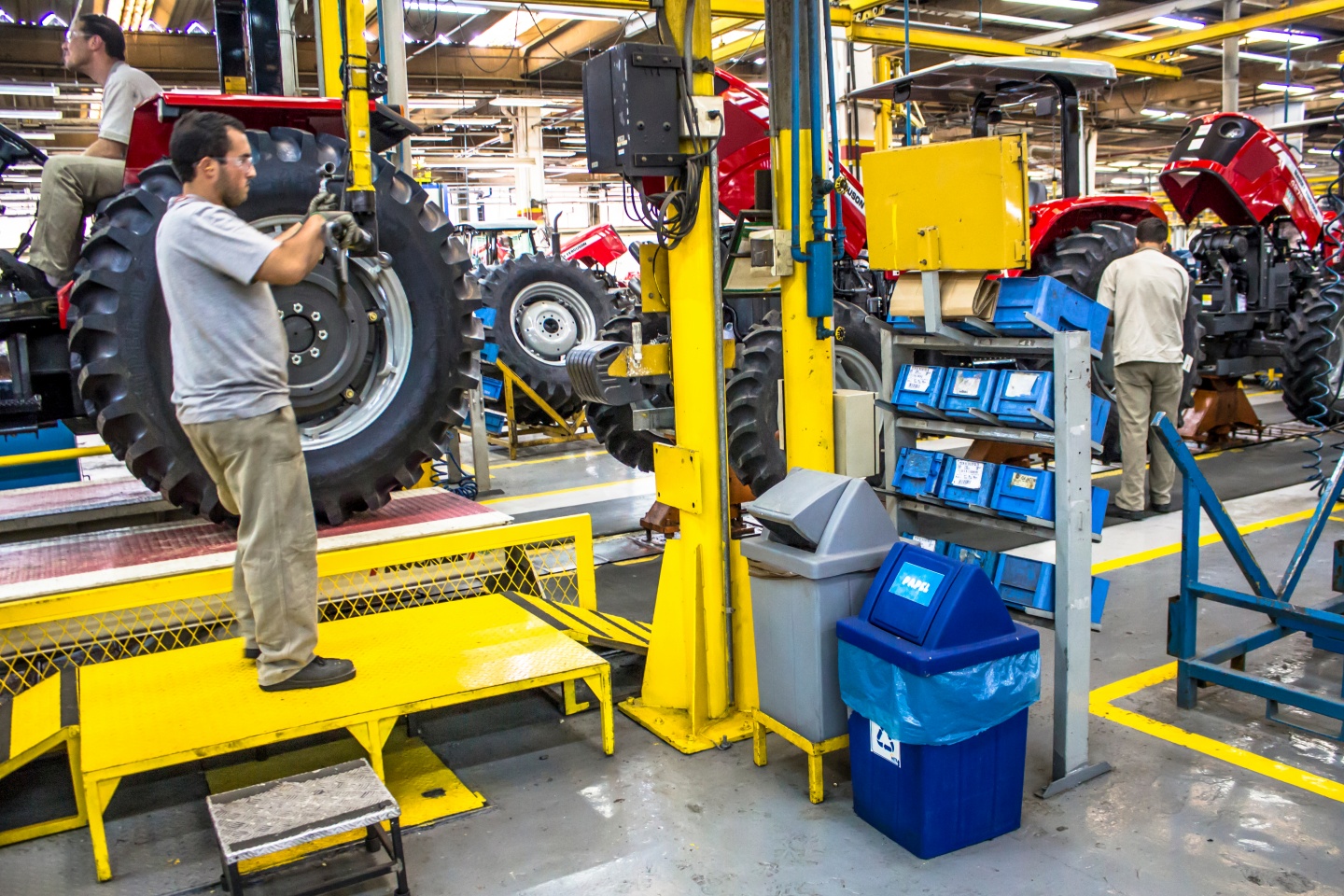
Mechanical engineering is the study of physical machines that may involve force and movement. It is an engineering branch that combines engineering physics and mathematics principles with materials science, to design, analyze, manufacture, and maintain mechanical systems. It is one of the oldest and broadest of the engineering branches
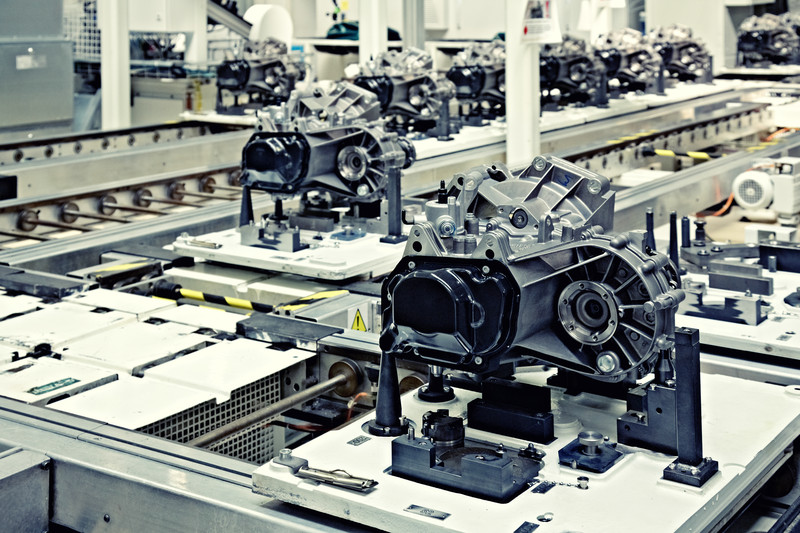
Production Engineering defines and works out how the product will be manufactured and/or assembled on the production line including design of packaging, ensuring the right quantity of components/products are delivered and aligned to support the speed of the production line
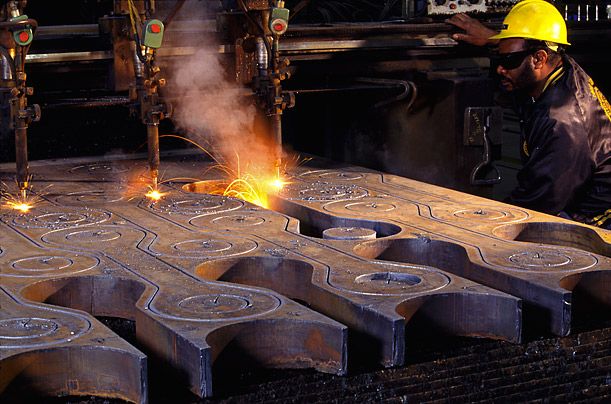
Metallurgical & Materials Engineering encompasses three inter-related engineering disciplines: mineral processing, extractive (or process) metallurgy, and materials science and engineering
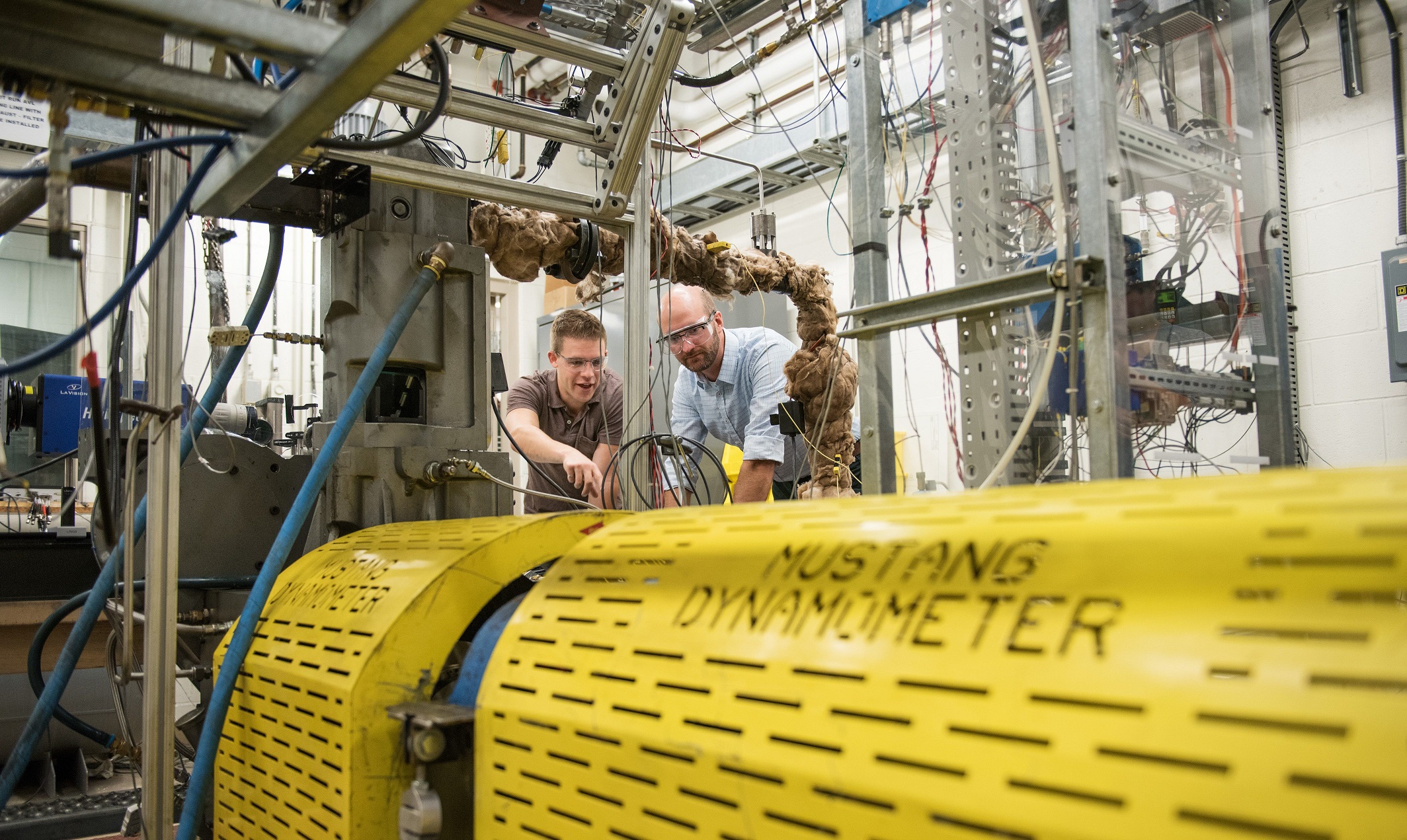
hermofluids is the combined study of heat transfer, fluid dynamics, thermodynamics, and combustion. The applications of Thermofluids range from efficient engine design to heating, ventilation, and air-conditioning (HVAC).
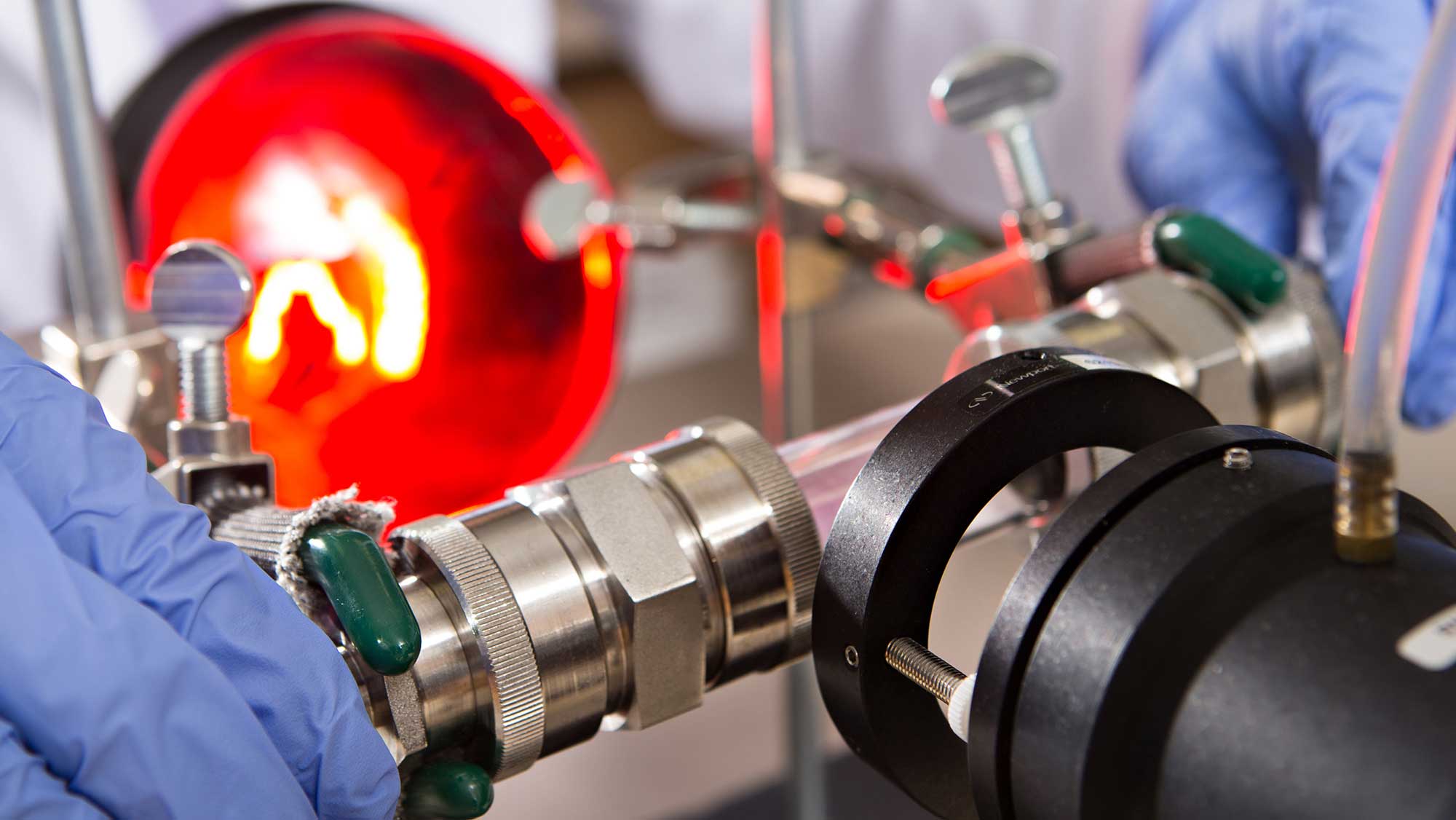
Solid mechanics is a discipline that studies materials and structures and how they deform under load. Broadly, the area interfaces with physics, chemistry, materials science, and computational science and engineering. Approaches vary from continuum to discrete description of material responses.
The undergraduate programme of the Mechanical Engineering Department, Federal University of Technology Minna is designed to meet the following specific objectives and in consultation with our Industrial Advisory Board, in order to fulfill the departmental and Institutional missions, has identified five Programme Educational Objectives (PEOs). The Mechanical Engineering Programme Educational Objectives (PEOs) describe the expectations of our graduates after a minimum of 5 (4, or 3) years training in the University and few years work experience by contributing to the society through modern technologies and practices. The Programme Educational Objectives (PEOs) of the undergraduate Mechanical Engineering programme are to prepare its graduates to:
PROGRAMME OUTCOMES (POs)
During 2022/2023 session the department graduated one hundred and forty-eight (148) students at the February, 2024 convocation, with 16 First Class, among which was the overall best graduating student in the entire University, 77 Second Class (Upper Division), 48 Second Class (Lower Division), and 7 Third Class degree.
Also, during 2023/2024 session the department graduated one hundred and ninety-nine (199) students at the February, 2025 convocation, with 13 First Class, among which was the overall best graduating student in the entire University, 87 Second Class (Upper Division), 89 Second Class (Lower Division), 9 Third Class degree and 1 Pass degree.
(b) The total number of PhD Students graduated was fourteen (14).
(c) The total number of Masters of Engineering (Meng) Students graduated was twenty- nine (29).
(d) The total number of Post Graduate Diploma (PGD) Students graduated was thirty-one (31).
The department supported the students’ forum of Nigerian Institution of Mechanical Engineers (NIMechE) with staff adviser and attends their functions regularly to offer supports and useful advice and guidance. Social media platforms were created for all levels with staff Adviser and the Head of Department belonging to all groups interface effectively with the students’ population on their smooth functioning of their academic activities amongst others demanded of them.
The Department offers the following options for the undergraduate programme:
Table: Undergraduate students’ enrolment in the past three sessions
|
Session |
100 |
200 |
300 |
400 |
500 |
Total |
Total |
||||||
|
M |
F |
M |
F |
M |
F |
M |
F |
M |
F |
M |
F |
||
|
2023/2024 |
151 |
10 |
189 |
4 |
151 |
7 |
127 |
5 |
143 |
7 |
761 |
33 |
794 |
|
2022/2023 |
196 |
2 |
150 |
9 |
159 |
5 |
156 |
7 |
151 |
5 |
812 |
28 |
840 |
|
2021/2022 |
139 |
9 |
144 |
5 |
174 |
7 |
153 |
6 |
105 |
4 |
715 |
31 |
746 |
The department offers the following programmes in post graduate studies;
The department recently successfully completed NUC accreditation exercise wherein she achieved 95% Full accreditation Status valid for Five-Year (2024 – 2029). The department also had her COREN OBE accreditation visit 22nd – 26th February, 2026.
Grants:
Research Grants won by staff of the department include:
Development of Expert System and Internet of Things (IoT) for Effective Plant Monitoring and Maintenance”, grant of #5,000,000.00 from Nigeria Artificial Intelligence Research Scheme to carry out research for the “2024 – 2025.
Development and Deployment of an Artificial Agent for Hospital Refuse Collection grant of #1, 999, 965.00 from TETFUND Institution-Based Research Intervention (IBRI) TETFUND/FUTMINNA/2024/034 as Co-Researcher for the “”, 2024.
Production of Absorbent Cartridges of Hydrochar for the Treatment of Pharmaceutical, Textile and Tannery Wastewaters in Nigeria” grant of #16,000,000.00 from Tertiary Education Trust Fund (TETFUND) 2022 -2024 NRF/SETI/WAS/00160
Laser Enabled Manufacturing of Solar Systems. grant of EU131,350.00 from Intra-Africa Academic Mobility Scheme, “
Surface Modification of Work Material using Powder Metallurgy (P/M) Compacted Electrodes during Electrical Discharge Machining (EDM), EDW B11-026-0504, RM20,000 project awarded by Research Management Centre (RMC), IIUM, Malaysia in 2011, as a Co-Researcher.
Enhancement of Surface Wear Characteristics of Titanium Alloy (Ti-6Al-4V) Using Electrical Discharge Machining (EDM), EDW B13-037-0922, RM19, 800 projects awarded by Research Management Centre (RMC), IIUM, Malaysia in 2013, as a Co-Researcher.
Development of Eco-Friendly Nanoparticle Based Cutting Fluids for High-Speed Machining of Carbon Fibre Reinforced Plastic, NRF/SETI/SAE/00053. N38,000,000.00 research grant awarded by TETFund, Nigeria in 2020 – 2022 grant period, as a Co-Researcher.
Laser-Enabled Manufacturing of Solar Systems (LaSoMa). European Union (EU) Grant, 2025 (Co-Researcher).
Development of an Electro-Mechanical Cracks Monitoring Device for Pipeline Structures. TETFUND Institution-Based Research Intervention (IBRI), 2024 (Principal Investigator).
Development of Carburized Mild Steel for Military and Civil Application Using Pulverized Coconut Shell Charcoal and Periwinkle Shell. Tertiary Education Trust Fund (TETFUND) 2020 NRF Research Grant Cycle (Principal Investigator).
Development of Eco-Friendly Nanoparticle Based Cutting Fluid for High-Speed Machining of Carbon Fibre Reinforced Plastic. Tertiary Education Trust Fund (TETFUND) 2020 NRF Research Grant Cycle (Co-Researcher).
Development of a Low-Cost Smart Pig and Wireless Pipeline Sensor Network for the Detection of Pipeline Defects and Anomalies. TETFUND Institution-Based Research Intervention (IBRI), 2017 (Co-Researcher).
Science Educational Mobile Intervention Laboratory that aids Teaching and Learning of Sciences for Nigerian Secondary Schools, NG/P/2014/398, 2016
Development and Performance Evaluation of a Hybrid 1000 – capacity Egg Incubator (TETFUND/FUTMINNA/2024/058)
Development and Performance Evaluation of a Hybrid 1000-Capacity Egg Incubator as Principal Investigator (PI), awarded amount N1,983,410.00 by Tetfund’s Institutional Based Research Intervention (IBRI) Scheme TETFUND/FUTMINNA/2024/58
Synthesis and Characterisation of Novel Nanofluids as Coolant in Automobile Application as co-researcher awarded amount N1,995,510.00 by Tetfund’s Institutional Based Research Intervention (IBRI) Scheme TETFUND/FUTMINNA/2024/75
Prof. A. Nasir won a grant of #1, 900, 000.00 from TETFUND Institution-Based Research Grant (TETFUND/FUTMINNA/2014/46) as the Principal Researcher
Prof. A. Nasir won a grant of #1, 000, 000.00 from Senate Research Based Fund (SENATE/FUTMINNA/2015/04) as the Principal Researcher
Development and Performance Evaluation of a Hybrid 1000-Capacity Egg Incubator as Principal Investigator (PI), awarded amount N1,983,410.00 by Tetfund’s Institutional Based Research Intervention (IBRI) Scheme TETFUND/FUTMINNA/2024/58
Synthesis and Characterisation of Novel Nanofluids as Coolant in Automobile Application as co-researcher awarded amount N1,995,510.00 by Tetfund’s Institutional Based Research Intervention (IBRI) Scheme TETFUND/FUTMINNA/2024/75
Patents:
Composite Screen and Integrated Protractor Device in Screen Printing Machine – RP: NG/P/2022/71
Mobile Collapsible and Solar Powered Weather Station Incorporating IoT, – RP: NG/P/2022/15.
Mechatronics Training Kits – RP: F/P/2022/336.
IoT Greenhouse Gases Data Logger – RP: NG/P/2023/382.
Science Educational Mobile Intervention Laboratory that aids Teaching and Learning of Sciences for Nigerian Secondary Schools, NG/P/2014/398, 2016
Composition of Biolubricant with Improved Thermo-Oxidation Stability, Thermo-Physical Properties and Tribological Properties; Biolubricants and Method thereof” 2025, Malaysian Patent No. MY-211188-A.
Commercialisation:
Technical Aid Corps: A staff of the department in person of Engr. Dr. Bori Ige was appointed as a Federal Government Technical Aid Corp (TAC) to Department of Mechanical Engineering, Kabale University, Uganda, 2024 to 2026.
Post-Doctoral: Engr. Dr. U. G. Okoro was awarded Postdoctoral Fellowship contract at the School of Mechanical, Industrial and Aeronautical Engineering, University of the Witwatersrand, Johannesburg, South Africa, 2024.
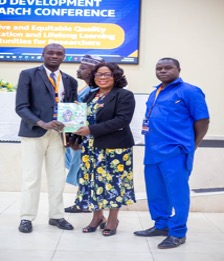
A member of Staff Engr. Dr. Sadiq S. Lawal was honoured with a Keynote Presentation of an Educational Invention during the 2025 Sustainable Education Development Research Conference (SEDRC) held at University of Ghana, Accra, Ghana where the Ghana Ministry of Education was fully represented for a buy-in.
|
SN |
Equipment |
Quantity |
|
1 |
Demonstration Lathe |
3 |
|
2 |
Weighing Balance (50kg capacity) |
1 |
|
3 |
Air-conditioning & Refrigeration Unit TPS-3950 |
4 |
|
4 |
Basic Refrigeration TPS-3951 |
2 |
|
5 |
Advance Refrigeration TPS-3953 |
1 |
|
6 |
Advance Refrigeration TPS-3954 |
1 |
|
7 |
Natural convection and Thermal Radiation Apparatus |
1 |
|
8 |
Air compressor |
3 |
|
9 |
U- Tube Gauge |
1 |
|
10 |
Autotronics Demonstration apparatus (assorted) |
38 |
|
11 |
Golf car for students practical |
1 |
|
12 |
Complete Tool Box |
1 |
|
13 |
Complete Vehicle Frame with Engine for Practical |
1 |
|
14 |
Digital Multimeter for Practical |
1 |
|
15 |
Dead Engines for practical |
2 |
|
16 |
Combined Extension and compression of spring |
1 |
|
17 |
Roof Truss |
1 |
|
18 |
Belt Friction Apparatus |
1 |
|
19 |
Modulus of Rigidity |
1 |
|
20 |
Flywheel |
1 |
|
21 |
Coil Friction |
1 |
|
22 |
Governor |
1 |
Members of staff of the department are actively engaged in various community and consultancy services in and outside the University. They occupy membership and leadership positions.
PGD alumni of 2023/2024 and 2024/2025 supported the department with Solar Power System installation to power the Head of Department’s Office, Exam Office, PG Office and Three (3) other Staff Offices,
M.Eng Students supported the department with three-in –One Printer.
The Departmental Alumni Public Relations Officer created a robust Alumni membership platform that have been interfacing and collaborating the Alumni with the Advancement Office (ADO), the Department, School and the University as the case may be.
The list of industrial linkages and community services that we are actively engaged with are: