
Materials and Metallurgical Engineering

About the Department

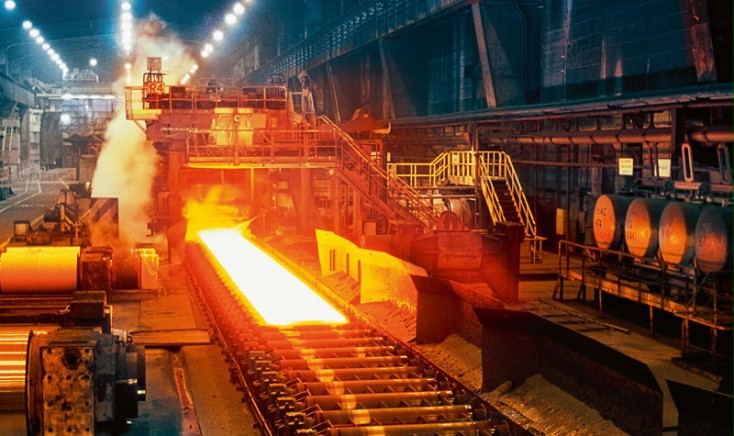
Materials and Metallurgy Engineering is a course for the design and development of wide range of materials for advanced and high technology applications. These include but not limited to: metals, non-metals, ceramics and polymers, composites. An emerging trend in the Engineering industry is the development of new processes for producing specialty materials, such as plastics, lightweight metal alloys, SMART materials, Nano-materials and Bio-materials, for wide variety of industrial and consumer applications. It is noteworthy that every product, regardless of size, shape and/or area of use, is made of materials. These materials must specify the correct properties; – first for the production and subsequently for service. The choice of materials must therefore ensure that the products will not fail in service. This course therefore covers these areas and is designed to provide the students with the skills for a successful career in the materials and related industries. As with most engineering courses, core engineering concepts are covered in earlier years of the course (One and two hundred levels), with specialty materials-related topics being introduced at the later stages which include industrial polymer engineering, reaction engineering, materials properties and structures, and Nano-technology.
Vision

To become an internationally recognized Center of Excellence for training, research and development in the field of Materials and Metallurgical Engineering.

Mission

Committed to providing high quality and innovative workforce for national development and global competitiveness, the Materials and Metallurgical Engineering Programme is designed to train graduates who will be producers. The Programme emphasizes on the processing of locally available raw materials and optimal utilization for national growths.

HOD BIOGRAPHY

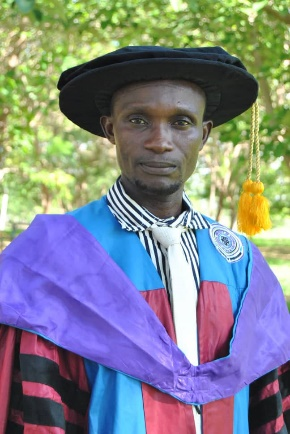
Engr. Prof. Muriana Raheed Aremu

Engr. Prof. Muriana Raheed Aremu joined the service of FUT Minna on the 9th of November 2005 as a lecturer II. He rose through the ranks and attained the rank of a Professor on the 1st of Oct 2018. When the Department of Materials and Metallurgy was created on the 17th September, 2014, by 387th special Senate of FUT, Professor R.A. Muriana was selected from Mechanical Engineering Department as one of the pioneering staff of the Materials and Metallurgical Engineering Department. His first appointment as HOD of the department was from February 2020 to March 2021, while the current (Second) term started from 2nd of March, 2021.  He is the second HOD since the inception of the department.


Professor R.A. Muriana teaches courses in Materials Science and Engineering Application at both undergraduate and post graduate levels. He has handled/supervised numerous M.Eng/M.Tech and PhD theses, just as a good number of researches under his supervision are ongoing. The Professor and his group won grants from TETFUND (National Research Funds, NRF) and Federal Ministry Mine and Steel Development, Abuja.


Professor Muriana is not left out in the development of his immediate community, the university and the world at large. He has served a number of administrative duties which he carried out diligently.  He served as undergraduate level adviser for years, Departmental Computer Maintenance officer, Examination officer for Mech. Eng. Dept. as well as for Materials and Metallurgy Department.


Professor Muriana is happily married with children.
 

Admission Requirement

There are two modes of admission into the bachelor’s degree Mechatronics Engineering Programme at FUT Minna. These are: The UTME mode and The Direct Entry (DE) mode. Admission requirements for the two modes are subsequently presented herewith.

Compliance with UTME Admission Requirements 

  1. Credit in five O’Level Subjects at General Certification of Education (GCE), Senior Secondary Certificate Education (SSCE) or an equivalent that must include Mathematics, Physics, Chemistry, English Language and any other science subject such as: Biology; Agricultural Science; Further Mathematics. The five Credits must be obtained at not more than two sittings.
  2. Candidates are required to sit for and pass University Tertiary Matriculation Examination in English Language, Mathematics, Chemistry and Physics.

Compliance with Direct Entry Admission Requirements

  1. Holders of Upper Credit Level in National Diploma in Mechanical/Material Engineering may qualify for admission at 200 Level plus the requirements stated above  
  2. GCE – A’ Level/IJMB with credit passes in Mathematics, Physics and Chemistry may also qualify for 200 Level.
  3. Holder of HND with at least Upper Credit in Materials/ Mechanical Engineering plus i(a) above may qualify for admission at 300 Level. Holders of HSC/GCE – A ‘Level/IJMBE with credit passes in Mathematics, Physics and Chemistry may also qualify for 200 Level.
  4. Direct entry candidates are required to pass the O’ Level grades stipulated in the UTME requirements. Direct entry students must also take and pass the General Studies courses offered at 100 and 200 Levels.   

Duration of the Programme

The Bachelor of Engineering Programme in Materials and Metallurgy Engineering is normally a five-year Programme (100-500 levels). However, direct entry candidates normally spend four years (A’ level, and OND Candidates) or three years (HND candidates).

The Programme is structured in such a way that all engineering students offer the same basic courses at 100 and 200 levels in order to prepare them for the Engineering profession. The 300 to 500 level courses are more detailed and focus towards training in Materials and Metallurgy Engineering.

A student cannot stay beyond one hundred and fifty percent (150%) of the normal duration of the Programme (i.e. 7.5, 6 and 4.5 sessions for 5, 4 and 3 year Programme respectively).

Programme Educational Objectives (PEOs)

The Materials and Metallurgical Engineering Programme Educational Objectives (PEOs) describe  the expectations  of our graduates  after a minimum of 5 (4, or 3) years training in the University and few years work  experience by contributing to the society through modern technologies and practices. It aims to enable suitably qualified graduates from a range of engineering backgrounds to:

PEO1 – Develop knowledge, skills (including transferable skills, such as leadership, motivation, time management, prioritisation, delegation, listening, communication, analytics) and understanding, as well as awareness and ―know how‖, in the fields of engineering and its related disciplines so that as graduates they will be equipped to enter into self-employment and employment as professional engineers progressing on to Registered Engineer (or equivalent status) or a wide range of other professional careers.

PEO2 – Prepare them to engage in life-long and critical enquiry with skills in research and knowledge acquisition and an appreciation of the value of education to the wider community.

PEO3 – Provide the engineering industry and profession in Nigeria and elsewhere, with ready employable and enterprising graduates prepared for the assumption of technical, managerial and financial responsibilities.

PEO4 – Engage in lifelong learning and professional development with proficient soft skills, creative, innovative, and readily develop entrepreneurial skills and technical competence, to be self-employed in consultancy, manufacturing or service industry.

PEO5 – Function as a socially, morally and legally responsible member of society with willingness to mentor fellow employers/employees and understand the ethical, social and economic impact of their work in a global context.


​PROGRAMME OUTCOMES (POs)

According to the Washington Accord Graduate Attributes adopted by the Washington Accord signatories, an engineer who is trained based on these attributes listed, can design solutions for complex problems based on the development of engineering activities that involve some or all the programme learning outcomes detailed below. These POs are the measurable statements that describe knowledge or skills that our students would achieve upon completion of their 5 Years Academic Program. All 12 POs defined in COREN Manual are embodied in the POs of the Department.


PO1 – Engineering Knowledge

Apply knowledge of mathematics, natural and engineering, sciences, mechanical engineering fundamentals, and engineering principles to solve complex engineering problems.

PO2 – Problem Analysis

Identify, formulate, conduct research literature, and analyse complex engineering problems reaching substantiated conclusions using first principles of mathematics, natural and engineering sciences and principles.

PO3 – Design/Development of Solutions

Design solutions for complex engineering problems and design systems, components or processes that meet specified needs with appropriate consideration for public health and safety, cultural, societal, and environmental considerations.

PO4 – Investigation

Conduct investigation of complex engineering problems using research-based knowledge and research methods including design of experiments, analysis and interpretation of data, and synthesis of information to provide valid conclusions.

PO5 – Modern Tool Usage

Create, select and apply appropriate techniques, resources, and modern engineering and IT tools, including prediction and modelling, to complex engineering problems, with an understanding of the limitations.

PO6 – The Engineer and Society

Apply reasoning informed by contextual knowledge to assess societal, health, safety, legal and cultural issues and the consequent responsibilities relevant to professional engineering practice and solutions to complex engineering problems.

PO7 – Environment and Sustainability

Understand and evaluate the sustainability and impact of professional engineering work in the solutions of complex engineering problems in societal and environmental contexts.

PO8 – Ethics

Apply ethical principles and commit to professional ethics and responsibilities and norms of engineering practice.

PO9 – Individual and Teamwork

Function effectively as an individual, and as a member or leader in diverse teams and in multi-disciplinary settings.

PO10 – Communication

Communicate effectively on complex engineering activities with the engineering community and with society at large, such as being able to comprehend and write effective reports and design documentation, make effective presentations, and give and receive clear instructions.

PO11 – Project Management

Demonstrate knowledge and understanding of engineering management principles and economic decision making and apply these to one’s own work, as a member and leader in a team, to manage projects in multidisciplinary environments.

PO12 – Life Long Learning

Recognise the need for and have the preparation and ability to engage in independent and life-long learning in the broadest context of technological change.