
Software engineering focuses on building reliable, secure and scalable software systems that meet real-world needs. It combines the core foundations of computer science with the practical methods used in engineering and project management. Graduates from this discipline are trained to design, develop, test and maintain software that serves governments, businesses and society at large.
The programme aims to produce professionals who can handle large and complex software projects, work effectively in teams, and deliver solutions that meet both functional and non-functional requirements. It also blends technical depth with broad knowledge of the computing field, encouraging innovation, critical thinking and ethical practice.
Vision
To be a leading centre of academic excellence in software engineering teaching and research in Nigeria.
Mission
The programme will build and develop high-level human capacity through comprehensive educational programmes and research in software engineering.
It will engage in collaborative research with industry and the government, disseminate knowledge through scholarly publications, and provide community services to professional societies, the state, the nation and the world at large.
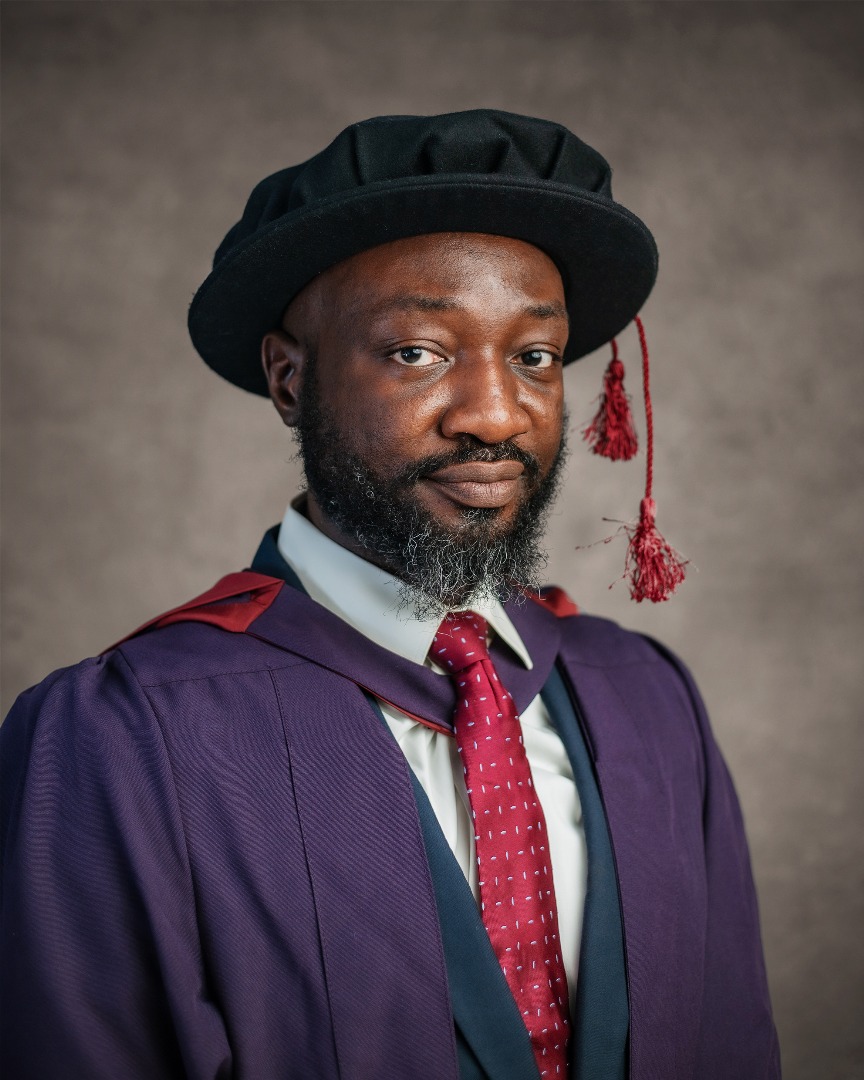
Dr. Oluwaseun A. Ojerinde leads the Department of Software Engineering with a strong mix of academic depth, industry experience and a long-standing commitment to developing future-ready computing professionals. He is a senior lecturer in the School of Information and Communication Technology and has built his career around mobile communications, computer science, blockchain technology, digital transformation and antenna systems.
His work spans more than nine years of teaching and research, with publications covering areas such as data security through encryption and blockchain, process optimisation, 5G technologies, on-body systems, MIMO systems, telecommunications, radio propagation and computer science education. He brings this breadth of knowledge into the classroom and into the department’s evolving academic direction.
Beyond teaching and research, Dr. Ojerinde has played important roles in academic administration across the school and the university. His responsibilities have included serving as Postgraduate Coordinator, Examination Officer, Admission Officer, Faculty Adviser, Seminar Coordinator, and a member of several key committees. He has represented the school in the University Senate and previously served as Deputy Director at the Centre for Open Distance and e-Learning (CoDEL). His work also extends to industry, where he serves as the tech lead at TTF Limited, coordinating product delivery and technical partnerships.
Dr. Ojerinde earned his BSc in Computer Technology from Babcock University, followed by an MSc in Mobile Communication Systems and a PhD in Electrical Engineering (Mobile Communication Systems) from Loughborough University in the United Kingdom. He also holds a diploma in electronic and electrical engineering from the Federal University of Technology, Minna. He is a member of the Computer Professionals (Registration Council of Nigeria) and the Institute of Electrical and Electronics Engineers (IEEE).
He actively mentors students, especially those involved in software development, cybersecurity and hackathon competitions, and serves on the advisory board of the Technology for Social Change and Development Initiative. His leadership in the department reflects a commitment to innovation, student growth and the advancement of software engineering in Nigeria.